Lower Back Pain
Lower back pain is one of the most common conditions we treat - and one of the most mismanaged. It ranges from a dull, persistent ache after a long day at your desk to sharp, debilitating pain that makes it hard to stand up straight. The cause matters. Treating back pain without identifying the source is why so many people go through cycles of temporary relief followed by the pain coming back.
At Sports Pain Management NYC (SPIN), our board-certified pain management specialists evaluate the full picture - your symptoms, history, imaging, and functional limitations - and build a targeted treatment plan focused on lasting relief, not just short-term pain control. Whether you are dealing with a recent back injury, chronic lower back pain from a disc problem, or unexplained pain that has not responded to physical therapy, we have the diagnostic tools and treatment options to help.
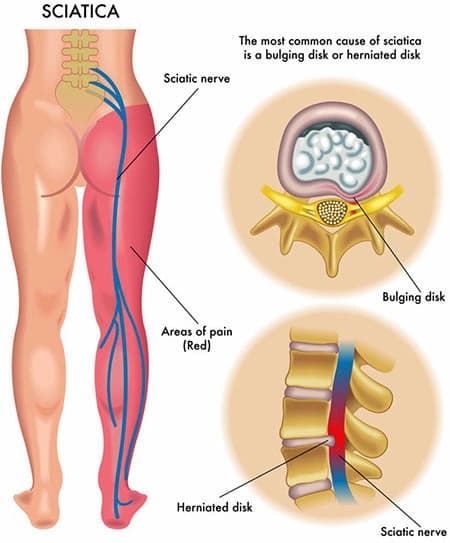
Sciatica — Common Cause of Lower Back Pain
Ready to get rid of your lower back pain?
If you're searching for a lower back pain doctor in NYC, same-day appointments are available.
Some of the lower back pain causes include:


Common and Uncommon Symptoms
Because so many things can cause back pain, you may experience a range of symptoms, some of which aren't even in your back. The type of pain you feel and the location of the pain can provide clues for our sports medicine team, so describe your symptoms thoroughly when you go in for a visit.
Symptoms You May Experience
- Severe lower back pain
- Numbness in your back, abdomen, legs or feet
- Tingling down one or both legs
- Muscle weakness in your lower extremities
- Painful urination
- Pain that gets worse when you cough, sneeze or bend
When to See a Doctor in NYC
When you're feeling severe lower back pain or prolonged pain anywhere in your body, make an appointment with your doctor in New York City. If your physician can't diagnose the source of your pain, come to the Sports and Pain Institute of NY. You'll find experts who not only can accurately diagnose your pain but provide lower back pain relief too.
How Low Back Pain Is Diagnosed

Lower Back Pain Shows Itself Differently
Low back pain differs from upper back pain and middle back pain more than just its location. Lower back pain shows itself in different ways. To diagnose the source of your pain, your pain specialist may need to run specific, targeted tests, such as:
- X-rays
- CT scan
- MRI
- Discography, for which contrast dye is injected into a problem disc before a CT scan
- Myelogram, which is a contrast dye x-ray or CT scan
- Nerve conduction test
- Bone scan, using radioactive material
If your doctor suspects that you have sacroiliitis – sometimes incorrectly called sacroiliitis – an MRI, CT scan or even an x-ray can confirm it. If further testing is required, your New York City doctor may apply pressure to areas between your buttocks and hips to find the source of your pain. As a final test for sacroiliitis, your doctor may administer an anesthetic injection into your sacroiliac joint.
How to Treat Lower Back Pain
Your sports medicine physician knows how to relieve lower back pain. Your lower back pain treatment may start simply – with rest, over-the-counter medications or physical therapy. You can also try massage or chiropractic treatments. Only if severe lower back pain persists do other treatment options become available, including:

Prescription-strength pain medication, such as anticonvulsants

Steroidal injections, such as a lumbar epidural steroid injection

Spinal cord stimulation

Minimally invasive surgery, in rare cases
The exact treatment options depend on your particular case. If you're suffering from sacroiliitis (or sacroilitis), you may need a sacroiliitis treatment like a nerve block injection. If you're suffering from lower left back pain, you may just need rest. If you have lower right back pain, maybe you have a kidney infection.
Preventing Lower Back Pain
While your age, weight, fitness and family history have a bearing on your risk of experiencing severe lower back pain, you can take steps now to reduce that risk. Pay attention to your spine health today, and you'll never have to seek lower back pain treatment.
Ready to find lower back pain relief?
Dr. Melepura's Midtown Manhattan clinic offers same-day appointments for lower back pain evaluation and treatment.
Lower Back Pain Treatment in NYC
Most lower back pain can be treated without surgery. The right approach depends on the underlying cause - which is why diagnosis always comes before treatment, at SPIN. Our physicians are board-certified in pain medicine with fellowship training in interventional spine procedures, and we treat lower back pain as a primary specialty every day.
What We Treat
Lower back pain has many causes, and each responds to different interventions. At SPIN, we regularly treat:
Herniated or bulging discs
Disc material pressing on a nerve root, causing local back pain or radiating leg pain.
Lumbar radiculopathy
Nerve compression in the lower spine causing pain, tingling, or weakness in the leg — often called sciatica.
Lumbar spinal stenosis
Narrowing of the spinal canal that compresses the spinal cord or nerve roots.
Facet joint arthritis
Degenerative changes in the small joints of the spine causing stiffness and local back pain.
Sacroiliac joint dysfunction
SI joint irritation that mimics disc pain and is frequently misdiagnosed.
Muscle and ligament strain
Acute injuries from lifting, twisting, or overexertion.
Degenerative disc disease
Age-related disc changes leading to chronic lower back pain.
Our Treatment Approach
We start with the diagnosis. Before recommending any intervention, we review your symptom history, conduct a physical exam, and — where clinically indicated — order or review MRI, X-ray, or CT imaging. Treatment is built around what we find.
Non-surgical treatment options at SPIN include:
Lumbar epidural steroid injections
anti-inflammatory medication delivered directly to the compressed nerve root
Facet joint injections
targeted injections to reduce inflammation in arthritic facet joints
Medial branch nerve blocks and radiofrequency ablation
for facet-mediated lower back pain with long-lasting results
Sacroiliac joint injections
for SI joint dysfunction that has been confirmed by diagnostic block
Trigger point injections
for myofascial pain and muscle-related back pain
Physical therapy coordination
we work with physical therapists to maintain and extend the gains from injection therapy
Oral medications
NSAIDs, muscle relaxants, and nerve pain medications as part of a broader plan
Real Stories from our Patients



Dr. Febin Melepura, MD
Double Board-Certified Pain Specialist
Meet Dr. Febin Melepura — Your Lower Back Pain Specialist in NYC
Dr. Febin Melepura, MD is a double board-certified interventional pain management specialist and the founder of the Sports Pain Institute of New York. He completed his residency and fellowship training at New York Presbyterian Hospital / Columbia University Medical Center, one of the nation's leading academic medical centers, where he specialized in interventional pain management.
He holds dual board certifications from the American Board of Anesthesiology and the American Board of Pain Medicine, and has treated more than 7,500 patients and performed over 5,250 procedures throughout his career. He has been named a Top Pain Management Doctor in New York and one of America's Top Doctors™ by Castle Connolly.
Dr. Melepura's approach to lower back pain is rooted in a simple principle: find the source, treat it precisely, and return you to the life you want to live — without surgery if at all possible.
Why Choose SPIN for Lower Back Pain in NYC

Board-certified pain management specialists with interventional spine subspecialty

Image-guided injections under fluoroscopic or ultrasound guidance for precision

Non-surgical-first approach - we exhaust every conservative option before any surgical referral

Same-week and next-day appointments for new patients

Midtown Manhattan location - accessible from all five boroughs and New Jersey

Most major insurance plans accepted
Ready to Book an Appointment?
Same-day appointments available. Call (212) 621-7746 or book online.
When to See a Lower Back Pain Specialist
Not all back pain needs a specialist. But there are specific signs that mean you should stop waiting and get evaluated:
Loss of bladder or bowel control — seek emergency care immediately
The sooner an accurate diagnosis is made, the better your options. Conditions like disc herniations and nerve compression are far easier to treat in earlier stages. Waiting for symptoms to resolve on their own — when they are not going to — risks progressive nerve damage and a longer recovery.
What Our Lower Back Pain Patients Say

"Able to make an appointment to see Dr. Melepura on short notice… attentive to my concerns… Jazmin was also very kind and helpful."

"Excellent hospitality, listener and explainer… highly recommend the doctor and the place."
"Dr. Melepura is the best! He worked with me to find the optimal solution to my shoulder pain while I was preparing for a fight!"
"Lovely, bright and modern… doctor and staff were kind… felt my concerns were heard."
"Helpful and friendly staff who gladly follows up with you if and when needed. Dr Melepura was very helpful and professional as well as provided me with excellent information and feedback."
"Dr Febin is fantastic! Highly recommend him and his practice the Spin clinic. The doctor is a good listener, kind, attentive and gave me great advice. "
"Dr.Melepura was very efficient and interpersonal, felt like he was understanding the problems I was having and explained the processes to take to rehabilitate. I would recommend."
"I felt listened to and truly understood by Dr. Melepura. Started PT the very next day. They were very friendly and I didn't feel rushed at all. Already recommended them to my friends who have or continue to play through pain."
Frequently Asked Questions About Lower Back Pain
The best treatment depends on the cause. Muscle strain responds to rest, anti-inflammatories, and physical therapy. Nerve-related or disc-related pain often responds best to epidural steroid injections. A proper diagnosis — not a generic protocol — is what determines the right treatment.