

Occipital Nerve Block
Your occipital nerves run through the muscles at the back of your head, just above your neck. There are two occipital nerves, one on either side of your head. When healthy, they carry physical sensations from the top and rear of your head to your brain.
A jarring neck injury to this part of your head, like the kind you can get from playing football or rugby, can damage one or both occipital nerves, causing neck pain and headaches. You may also suffer from this type of pain, also referred to as occipital neuralgia, if your occipital nerves are inflamed or irritated. If this describes the pain you're suffering from, you're a good candidate for an occipital neuralgia nerve block at our pain treatment clinic.
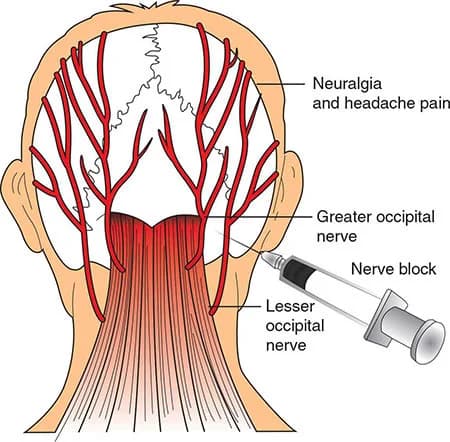
Occipital Nerve Block NYC — SPIN Sports Pain Specialists
Ready to get relief from occipital nerve pain?
Same-day occipital nerve block appointments available.
Why You Need an Occipital Neuralgia Nerve Block
The pain from a pinched or damaged occipital nerve appears on just one side of your head, unless both nerves were affected. You may feel a sharp and stabbing pain that can radiate toward your eye. It can make your forehead so sensitive that you can't wash your hair, wear a hat or rest your head on a pillow. Occipital nerve pain makes it difficult to maintain your lifestyle.
Occipital nerve blocks are designed to relieve you of the pain from one or both occipital nerves. A nerve block injection interferes with the nerve's capability to send pain signals to your brain. You may need more than one treatment for it to reduce your pain, but occipital nerve blocks can remain effective for several months.
The Occipital Nerve Block Procedure
To perform an occipital neuralgia nerve block, our doctor follows a simple procedure. It's relatively painless and takes just minutes to complete. The steps, similar to a cervical epidural steroid injection, include:
- You lie on the x-ray table, face down.
- The area at the back of your head is numbed with a local anesthetic. Unless you're particularly nervous about the procedure, you don't need a sedative.
- Your doctor uses a fluoroscope, which sends a series of real-time x-ray images to a monitor.
- Using the monitor as a guide, your doctor inserts a thin needle to reach your occipital nerves.
- Once the needle is in place, a combination of steroid medicine, saline and local anesthetic is injected to wash over your nerve.
- The doctor withdraws the needle.
- You're watched for a short time, anywhere from 15 minutes to an hour, depending whether you had a sedative or not. Then you're cleared to return home. If you did have a sedative, you need someone else to drive you home.
What to Expect Afterward
The anesthetic in the injection kills your pain immediately, but that's just a temporary fix, and the anesthetic wears off after a few hours. So, you can expect your pain to return. You may even experience an occipital nerve block migraine headache, as your head is sore from the injection process and from the medication itself. Remember, this pain is also temporary.
Within three days, the steroid medicine begins to work, and you should notice a drastic decrease in your pain level. The pain may not disappear completely, but it should drop to a manageable level. If not, contact your doctor. You can have multiple occipital nerve blocks, but most sports and pain doctors won't exceed three shots in a six-month period. Normally, the pain-killing effect of an occipital neuralgia nerve block lasts up to three months.
Risks and Side Effects of the Occipital Nerve Block Procedure
You shouldn't have an occipital neuralgia nerve block if you're on blood-thinning drugs, have an untreated heart condition or suffer from diabetes. Also tell your doctor if you have an active infection in another part of your body. You may have to reschedule your occipital nerve block procedure.
Complications and Side Effects From Occipital Nerve Blocks are rare. But a small percentage of patients may experience:

Injection site pain, but this should disappear within a day

Bleeding at the injection site, which should stop with direct pressure

Infection and fever symptoms

An occipital nerve block migraine or worsening pain
Contact our specialist right away if you experience worsening pain or the symptoms of a fever. Remember that the pain-killing effects of the steroid medication don't start to work until two or three days after your occipital nerve block procedure. Don't exert yourself while you're waiting for the medicine to do its job. Once the pain has eased, you can return to your normal routine.
Ready to find relief from occipital nerve pain?
Dr. Melepura's Midtown Manhattan clinic offers same-day appointments for evaluation and treatment.
Real Stories from our Patients




Dr. Febin Melepura, MD
Double Board-Certified Pain Specialist
Meet Dr. Febin Melepura — Your Occipital Nerve Block Specialist in NYC
Dr. Febin Melepura, MD is a double board-certified interventional pain management specialist and the founder of the Sports Pain Institute of New York. He completed his residency and fellowship training at New York Presbyterian Hospital / Columbia University Medical Center, one of the nation's leading academic medical centers.
He holds dual board certifications from the American Board of Anesthesiology and the American Board of Pain Medicine, and has treated more than 7,500 patients and performed over 5,250 procedures throughout his career. He has been named a Top Pain Management Doctor in New York and one of America's Top Doctors™ by Castle Connolly.
Dr. Melepura's approach to occipital nerve block procedures is rooted in precision: identify the exact source, treat it with a targeted injection, and get you back to your daily life as quickly as possible.
Ready to Book an Appointment?
Same-day appointments available. Call (212) 621-7746 or book online.
What Our Occipital Nerve Block Patients Say

"Able to make an appointment to see Dr. Melepura on short notice… attentive to my concerns… Jazmin was also very kind and helpful."

"Excellent hospitality, listener and explainer… highly recommend the doctor and the place."
"Dr. Melepura is the best! He worked with me to find the optimal solution to my shoulder pain while I was preparing for a fight!"
"Lovely, bright and modern… doctor and staff were kind… felt my concerns were heard."
"Helpful and friendly staff who gladly follows up with you if and when needed. Dr Melepura was very helpful and professional as well as provided me with excellent information and feedback."
"Dr Febin is fantastic! Highly recommend him and his practice the Spin clinic. The doctor is a good listener, kind, attentive and gave me great advice. "
"Dr.Melepura was very efficient and interpersonal, felt like he was understanding the problems I was having and explained the processes to take to rehabilitate. I would recommend."
"I felt listened to and truly understood by Dr. Melepura. Started PT the very next day. They were very friendly and I didn't feel rushed at all. Already recommended them to my friends who have or continue to play through pain."