

Patellofemoral Pain Syndrome
Also known as runner's knee, patellofemoral pain syndrome refers to any pain originating in the front of your knee. This knee pain frequently occurs in teenagers, manual laborers, and athletes. The patella is the small bone located in front of each knee joint where your femur, or thighbone, and your tibia, or shin, meet. The patella protects your knee and connects the muscles in the front of the thigh to your shinbone.
The patella tendon may weaken or be compromised, which may then allow some unnatural movement of the patella. This leads to the patella rubbing against your femur, creating pain at the point of contact. Untreated, the pain can lead to chronic conditions such as patellofemoral pain syndrome and patella tendonitis. Talk to your sports medicine doctor if you suspect a patella injury or wear-and-tear symptoms.
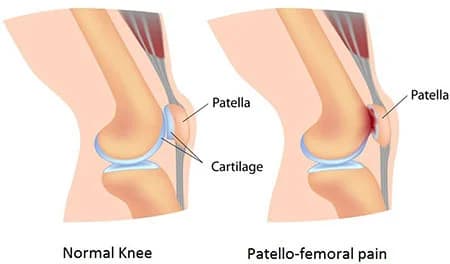
Patellofemoral Pain Syndrome NYC — SPIN Sports Pain Specialists
Ready to get relief from patellofemoral pain syndrome?
Same-day patellofemoral pain syndrome appointments available.
Symptoms of Patella Tendon Pain
Your symptoms may be mild and irritating to severe and debilitating. Some people have reported a combination of symptoms. Yours may include:
- Pain at the front of your knee, especially when it's bent — such as when you're sitting, squatting, jumping, running or using the stairs
- Occasional knee buckling or feeling as if it won't support your weight, which might indicate a patella tendon tear
- Catching or popping, accompanied by a grinding sensation when you're walking or moving your knee
- Tenderness along the inner border of your knee
- Swelling after exercise
- Tight muscles around your knee
- Atrophied quadriceps muscles
Risk factors for having a patella tendon tear include :
- Age, because it's often happens to young people
- Gender, because women are more likely to have issues with their knees than men
- Participating in any sports that involve running and jumping
Other Causes of Patella Tendon Pain
Patella tendon pain often occurs after consistent and continuous repetitive activity of some kind. External factors or internal conditions also may predispose the patella to injury. These factors cover a range of conditions, such as:

Wearing down, roughening, or softening the cartilage under your knee

An overuse injury

A direct blow or trauma to your knee

Excessive weight

A kneecap that's not properly aligned

Changes under your kneecap

Sudden, increased training load

The types of shoes you wear

The quality of the training surfaces you use

Muscle imbalance or weakness around your knee and tendons
Diagnosis for Patellar Tendonitis
Your NYC sports and pain medicine doctor understands the frustration and limitations that occur with patellar tendon pain.
Since you need your knees to get around every day, your doctor also checks your range of motion before suggesting any patella tendonitis treatment. You may need to have some imaging tests — such as x-rays, computed tomography (CT scans), or magnetic resonance imaging (MRIs) — to see any malformations in the bones, tendons, ligaments, and muscles.
Ready to find relief from patellofemoral pain syndrome?
Dr. Melepura's Midtown Manhattan clinic offers same-day appointments for evaluation and treatment.
Treatment for Patella Tendonitis
The goal of patella tendonitis treatment is to reduce symptoms, identify the cause and strengthen or retrain your muscles. All of these get you back on the road to pain-free mobility with the hope of preventing future injuries. Other patella tendonitis treatments your doctor may suggest include:
Rarely, arthroscopic surgery may be an option to release tightened muscles or to realign your patella. Your doctor only recommends an invasive procedure after no other treatments have succeeded in solving your pain.
Minor pain involving the patella tendon may resolve on its own within a few weeks to a few months. Surgery recovery time, however, can take between three and six months. Aftercare includes the prevention of further injury by maintaining the strength of your supporting muscles, losing weight, and doing proper stretching. Get the best treatment for patella tendonitis to prevent further patella tendon pain.
Real Stories from our Patients







Dr. Febin Melepura, MD
Double Board-Certified Pain Specialist
Meet Dr. Febin Melepura — Your Patellofemoral Pain Syndrome Specialist in NYC
Dr. Febin Melepura, MD is a double board-certified interventional pain management specialist and the founder of the Sports Pain Institute of New York. He completed his residency and fellowship training at New York Presbyterian Hospital / Columbia University Medical Center, one of the nation's leading academic medical centers.
He holds dual board certifications from the American Board of Anesthesiology and the American Board of Pain Medicine, and has treated more than 7,500 patients and performed over 5,250 procedures throughout his career. He has been named a Top Pain Management Doctor in New York and one of America's Top Doctors™ by Castle Connolly.
Dr. Melepura's approach to patellofemoral pain syndrome is rooted in precision: identify the exact source, treat it with a targeted injection, and get you back to your daily life as quickly as possible.
Ready to Book an Appointment?
Same-day appointments available. Call (212) 621-7746 or book online.
What Our Patellofemoral Pain Syndrome Patients Say

"Able to make an appointment to see Dr. Melepura on short notice… attentive to my concerns… Jazmin was also very kind and helpful."

"Excellent hospitality, listener and explainer… highly recommend the doctor and the place."
"Dr. Melepura is the best! He worked with me to find the optimal solution to my shoulder pain while I was preparing for a fight!"
"Lovely, bright and modern… doctor and staff were kind… felt my concerns were heard."
"Helpful and friendly staff who gladly follows up with you if and when needed. Dr Melepura was very helpful and professional as well as provided me with excellent information and feedback."
"Dr Febin is fantastic! Highly recommend him and his practice the Spin clinic. The doctor is a good listener, kind, attentive and gave me great advice. "
"Dr.Melepura was very efficient and interpersonal, felt like he was understanding the problems I was having and explained the processes to take to rehabilitate. I would recommend."
"I felt listened to and truly understood by Dr. Melepura. Started PT the very next day. They were very friendly and I didn't feel rushed at all. Already recommended them to my friends who have or continue to play through pain."