

Peroneal Tendonitis
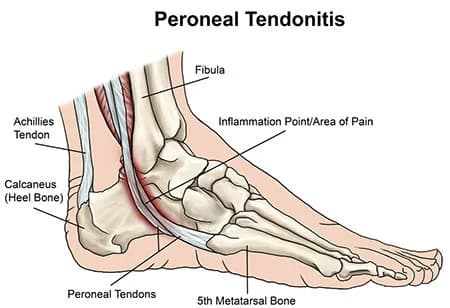
A tendon is a band of tissue that connects muscle to bone. Your peroneal tendons run on either side of your leg and protect your foot and ankle. On the outside of your foot, the tendon connects to the outside of your foot at your little toe. On the inside of your foot, the tendon connects to the inside arch. If you participate in sports or other repetitive motions, your peroneal tendon can injure.
Peroneal Tendonitis NYC — SPIN Sports Pain Specialists
Ready to treat your peroneal tendonitis?
Same-day appointments available.
What if My Peroneal Tendon Tears?
New York residents are known for their strength and resilience. But even the toughest New Yorker can have trouble standing strong when dealing with the pain of tendonitis. The simplest activities can become a challenge when you're having trouble walking with ankle pain. While peroneal tendonitis is most common among athletes, anyone can be affected.
Your bones provide the structure for your body and your muscles control your motion. Tendons tie them all together to make your body a functional machine. Tendons bind muscle to bone. Your tendons stretch as needed to keep things moving. But tendons are tougher than muscles.
The peroneal tendons are two bands of tissue stretching from your calves to your feet. They help you control the movement of your feet and ankles. Peroneal tendonitis refers to a peroneal tendon tear or other injuries to those tendons. A tear can happen if the tendon is overstretched. When the tendon rubs against the bone, it causes pain, discomfort, and inflammation.
Symptoms of Peroneal Tendonitis
Pain is the primary symptom of peroneal tendonitis. You may notice pain:

On the side or at the back of your ankle

Appearing or worsening during or after exercise

While pressing on the ankle

When flexing your ankle or rotating your foot
Peroneal tendonitis causes swelling, especially at the back of your ankle. Some people with peroneal tendonitis notice that the area feels warm to the touch. Injury to your peroneal tendons causes your ankle to feel unstable. This makes it difficult to bear any weight on that leg.
Risk Factors and Causes
Peroneal tendonitis is the result of overuse. Excessive training or suddenly beginning a rigorous exercise program can cause a tear. Failure to stretch before starting an activity can lead to a tendon injury. If you are accustomed to physical activity you should still always do a warm-up before working out.
People with high arches or pronate ankles (when you roll to the side) may be prone to developing peroneal tendonitis. This is because your ankles don't have strong support. The same is true for people who have low muscle tone in the lower extremities. If you've suffered an ankle injury such as a sprained or broken ankle and didn't complete proper treatment for the injury, you're more likely to develop peroneal tendonitis in the future.
Diagnosing Peroneal Tendonitis
Treatment for peroneal tendonitis starts with an accurate diagnosis. When you visit our sports medicine practice, the physician takes a full inventory of your symptoms, along with complete medical history. Disclose any activity that you were involved in prior to the injury. It helps the doctor determine the possible cause.
The next step is a physical exam on your sore foot and ankle. It may be necessary to move it around or apply pressure to determine the points of pain. You may need to have an x-ray, MRI, or other diagnostic tests. Tests rule out problems in the bone or muscle before proceeding with peroneal tendonitis treatment.
Peroneal Tendonitis Pain Treatment NYC
The common first step in peroneal tendonitis pain relief is rest. You're in pain because your tendon has been overworked. Resting helps it heal by itself. Your physician may recommend you stay off your feet. Depending on the severity of the injury, your doctor may give you a boot. Wearing a boot helps to immobilize the joint. Bracing the injury is an effective treatment for peroneal tendonitis.
The common first step in peroneal tendonitis pain relief is rest. You're in pain because your tendon has been overworked. Resting helps it heal by itself. Your physician may recommend you stay off your feet. Depending on the severity of the injury, your doctor may give you a boot. Wearing a boot helps to immobilize the joint. Bracing the injury is an effective treatment for peroneal tendonitis.
Anti-inflammatory painkillers, such as ibuprofen, relieve your pain and reduce the swelling associated with peroneal tendonitis. Apply ice to reduce the swelling when you notice you're hurt. In serious cases, the doctor may recommend an injection of cortisone to stop the pain. Surgery is only an option if all other peroneal tendonitis treatments have been unsuccessful.
Anti-inflammatory painkillers, such as ibuprofen, relieve your pain and reduce the swelling associated with peroneal tendonitis. Apply ice to reduce the swelling when you notice you're hurt. In serious cases, the doctor may recommend an injection of cortisone to stop the pain. Surgery is only an option if all other peroneal tendonitis treatments have been unsuccessful.
Physical therapy speeds up your recovery and teaches you safer ways to exercise. A physical therapist works with you to devise a plan that allows you to remain active. You can maintain your lifestyle without the risk of further injury to your tendons.
Physical therapy speeds up your recovery and teaches you safer ways to exercise. A physical therapist works with you to devise a plan that allows you to remain active. You can maintain your lifestyle without the risk of further injury to your tendons.
Recovery and Prevention
Once the pain and swelling go down and your sports and pain doctor is confident that your tendons have healed, you can return to normal activity. Many people recover from peroneal tendonitis with no further complications. Sometimes, though, peroneal tendonitis becomes chronic or recurring.
To prevent the recurrence of peroneal tendonitis or a peroneal tendon tear:
Ready to find relief from peroneal tendonitis?
Dr. Melepura's Midtown Manhattan clinic offers same-day appointments for evaluation and treatment.
Real Stories from our Patients






Dr. Febin Melepura, MD
Double Board-Certified Pain Specialist
Meet Dr. Febin Melepura — Your Peroneal Tendonitis Specialist in NYC
Dr. Febin Melepura, MD is a double board-certified interventional pain management specialist and the founder of the Sports Pain Institute of New York. He completed his residency and fellowship training at New York Presbyterian Hospital / Columbia University Medical Center, one of the nation's leading academic medical centers.
He holds dual board certifications from the American Board of Anesthesiology and the American Board of Pain Medicine, and has treated more than 7,500 patients and performed over 5,250 procedures throughout his career. He has been named a Top Pain Management Doctor in New York and one of America's Top Doctors™ by Castle Connolly.
Dr. Melepura's approach to peroneal tendonitis is rooted in precision: identify the exact source, treat it with a targeted injection, and get you back to your daily life as quickly as possible.
Ready to Book an Appointment?
Same-day appointments available. Call (212) 621-7746 or book online.
What Our Peroneal Tendonitis Patients Say

"Able to make an appointment to see Dr. Melepura on short notice… attentive to my concerns… Jazmin was also very kind and helpful."

"Excellent hospitality, listener and explainer… highly recommend the doctor and the place."
"Dr. Melepura is the best! He worked with me to find the optimal solution to my shoulder pain while I was preparing for a fight!"
"Lovely, bright and modern… doctor and staff were kind… felt my concerns were heard."
"Helpful and friendly staff who gladly follows up with you if and when needed. Dr Melepura was very helpful and professional as well as provided me with excellent information and feedback."
"Dr Febin is fantastic! Highly recommend him and his practice the Spin clinic. The doctor is a good listener, kind, attentive and gave me great advice. "
"Dr.Melepura was very efficient and interpersonal, felt like he was understanding the problems I was having and explained the processes to take to rehabilitate. I would recommend."
"I felt listened to and truly understood by Dr. Melepura. Started PT the very next day. They were very friendly and I didn't feel rushed at all. Already recommended them to my friends who have or continue to play through pain."
Frequently Asked Questions
Peroneal tendonitis pain can either have a quick onset or pain can gradually increase. You will feel pain in the back of the ankle. The pain can feel sharp or achier. It gets worse during activity and lessens during rest.