

Sympathetic Nerve Block
An effective treatment to ease pain in your lower back, a lumbar sympathetic nerve block delivers pain relief exactly where it's needed. A sympathetic block is a series of injections aimed at stopping your sympathetic nerves from carrying pain massages from your lumbar or lower back up to your brain. It's considered a pain management technique.
Your sympathetic nerves don't always carry pain massages, and they don't hurt just because another set of nerves are hurting. Your lumbar sympathetic nerves run along your spine in your lower back. Most of the time, their purpose is to control your body's unconscious functions, like your breathing and blood flow.
Sympathetic Nerve Block NYC — SPIN Sports Pain Specialists
Ready to find relief from sympathetic nerve pain?
Same-day sympathetic block appointments available.
Why You Need a Sympathetic Block
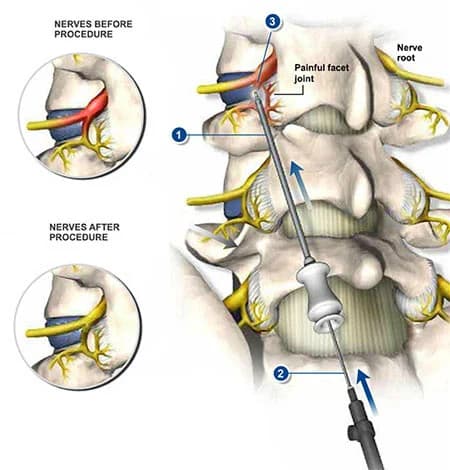
A lumbar sympathetic nerve block delivers anti-inflammatory pain medicine directly to your sympathetic nerves, where you're feeling the pain. In most cases, the pain from your sympathetic nerves travels from your lower back down one leg. Since sciatica presents similar symptoms, it takes a knowledgeable and experienced pain physician in New York City to diagnose the real cause of your pain.
The pain you experience can affect your day-to-day life and your activity levels. The discomfort isn't limited to an activity like running or standing either; it's a constant ache that can force you to seek over-the-counter pain relievers. The pain may limit your mobility as well. If rest and nonprescription medications don't ease your pain, schedule a visit to the Sports and Pain Institute of Manhattan, NY.
Sympathetic nerves run along both sides of your spine. If you feel pain in your face and upper body, a stellate gang block may help. Like a lumbar sympathetic nerve block, a stellate gang block eases pain, but instead of pain in your lower back and leg, this pain is in your head, chest or arms. This procedure may also be used as a diagnostic tool to test whether your stellate ganglion is the cause of your pain and discomfort.
The Sympathetic Block Procedure
Both a lumbar sympathetic nerve block and a stellate gang block are painless. They're outpatient procedures that can be done in your Midtown Manhattan doctor's office. The entire procedure usually takes less than a half hour to complete. The procedure follows specific steps:
First, you're made comfortable on an x-ray table, lying face down. The x-ray machine delivers continuous fluoroscopic images that help your doctor place the injections exactly where they're needed.
First, you're made comfortable on an x-ray table, lying face down. The x-ray machine delivers continuous fluoroscopic images that help your doctor place the injections exactly where they're needed.
You may receive intravenous medicine to relax you, but this isn't general anesthesia. You remain conscious during the procedure.
You may receive intravenous medicine to relax you, but this isn't general anesthesia. You remain conscious during the procedure.
Your doctor applies a topical anesthetic to numb your skin so you won't feel the initial prick of the needle.
Your doctor applies a topical anesthetic to numb your skin so you won't feel the initial prick of the needle.
The fluoroscopic images guide your doctor to the sympathetic nerves where your pain originates. A contrast dye is injected first, to make the area easier to see on the fluoroscope.
The fluoroscopic images guide your doctor to the sympathetic nerves where your pain originates. A contrast dye is injected first, to make the area easier to see on the fluoroscope.
Once the exact spot along your spine is identified, your doctor injects the medicine — a combination of saline, local anesthetic and steroidal anti-inflammatory drugs — all around the area.
Once the exact spot along your spine is identified, your doctor injects the medicine — a combination of saline, local anesthetic and steroidal anti-inflammatory drugs — all around the area.
After withdrawing the needle, a small bandage is placed over the injection site.
After withdrawing the needle, a small bandage is placed over the injection site.
Ready to find relief from sympathetic nerve pain?
Dr. Melepura's Midtown Manhattan clinic offers same-day appointments for evaluation and treatment.
After the Procedure
Your back pain should ease right away, as the local anesthetic gets to work. It's possible that your back or legs may feel numb for a few hours. Your legs may even feel weak during this time. These temporary side effects are from the anesthetic, which stops working after a few hours.
In the case of a stellate gang block, you shouldn't feel any numbness in your face, but you may have a droopy eye temporarily. This and any other side effects disappear as the local anesthetic wears off.
Your pain may return at this time because the steroid medication hasn't yet begun to work its magic. The steroids reduce inflammation, which in turn eases your pain. But it may take as long as two days after the injection for you to feel these effects. In the meantime, your doctor may prescribe prescription-strength pain relievers for a short duration.
Results from the Nerve Block
A lumbar sympathetic nerve block and a stellate gang block both stop the symptoms of pain. They don't heal your problem by themselves. But by allowing you to relax without pain, your body can better heal itself. If successful, the effects of the injections last for several months.
If the procedure doesn't deliver long-term pain relief, you can repeat it in several weeks. But you can't rely on this technique forever, as the steroid medication can affect your bones. Other risks, which are all rare, include:
- Bleeding
- Infection at the injection point
- Infection at your nerve
- Nerve damage
- Temporary headache
Real Stories from our Patients



Dr. Febin Melepura, MD
Double Board-Certified Pain Specialist
Meet Dr. Febin Melepura — Your Sympathetic Block Specialist in NYC
Dr. Febin Melepura, MD is a double board-certified interventional pain management specialist and the founder of the Sports Pain Institute of New York. He completed his residency and fellowship training at New York Presbyterian Hospital / Columbia University Medical Center, one of the nation's leading academic medical centers.
He holds dual board certifications from the American Board of Anesthesiology and the American Board of Pain Medicine, and has treated more than 7,500 patients and performed over 5,250 procedures throughout his career. He has been named a Top Pain Management Doctor in New York and one of America's Top Doctors™ by Castle Connolly.
Dr. Melepura's approach to sympathetic nerve blocks is rooted in precision: identify the exact source, treat it with a targeted injection, and get you back to your daily life as quickly as possible.
Ready to Book an Appointment?
Same-day appointments available. Call (212) 621-7746 or book online.
What Our Sympathetic Block Patients Say

"Able to make an appointment to see Dr. Melepura on short notice… attentive to my concerns… Jazmin was also very kind and helpful."

"Excellent hospitality, listener and explainer… highly recommend the doctor and the place."
"Dr. Melepura is the best! He worked with me to find the optimal solution to my shoulder pain while I was preparing for a fight!"
"Lovely, bright and modern… doctor and staff were kind… felt my concerns were heard."
"Helpful and friendly staff who gladly follows up with you if and when needed. Dr Melepura was very helpful and professional as well as provided me with excellent information and feedback."
"Dr Febin is fantastic! Highly recommend him and his practice the Spin clinic. The doctor is a good listener, kind, attentive and gave me great advice. "
"Dr.Melepura was very efficient and interpersonal, felt like he was understanding the problems I was having and explained the processes to take to rehabilitate. I would recommend."
"I felt listened to and truly understood by Dr. Melepura. Started PT the very next day. They were very friendly and I didn't feel rushed at all. Already recommended them to my friends who have or continue to play through pain."